
PA Blog
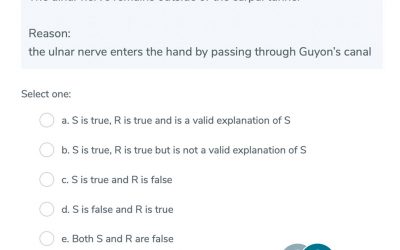
GSSE Question Type B
Statement & Reasoning. Type B questions consist of a statement (S) and a reason (R) in which you need to determine the relationship between the two. Firstly, determine whether S and R are true or false, if S and R are both true you will then need to determine whether R explains S.
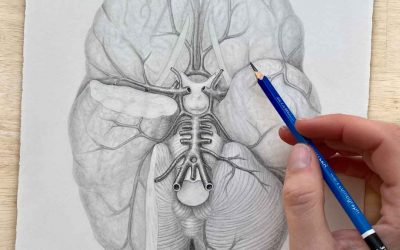
The Circle of Willis
Our medical illustrator has been working tirelessly to produce original illustrations that reference Rohens Atlas but decontextualize and simplify the images, helping develop your visual memory and allowing you to focus on the landmarks and relations between anatomical structures – essential for your GSSE prep!
3 month study plan for the November exam
With the November GSSE only a few months away now is a fantastic time to sign up to our 3 month study plan! Primary Anatomy is currently on sale with a 20% discount on all our products.
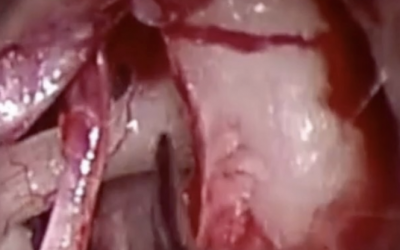
Stapedectomy For Otosclerosis
This is a follow-on post from yesterday’s article on stapes surgery for the management of otosclerosis.
Forty Years of Stapes Surgery – Dr Shea
Otosclerosis is the commonest cause of acquired deafness in young adults. The development of the stapedectomy operation in 1956 by Dr John Shea has transformed the outcomes for these patients.
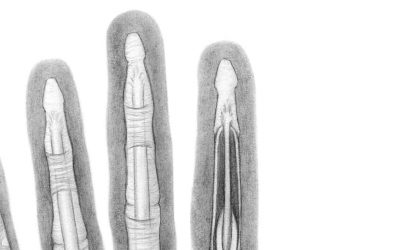
Anatomy of the digits
GSSE Spot test! Who’s confident with their digital anatomy? This is a follow-on post from last week’s spot test on the anatomy of the hand.
Proudly Supporting the Aus & NZ Surgical Society
Primary Anatomy is immensely proud to announce our new partnership with the Australasian Students’ Surgical Association!
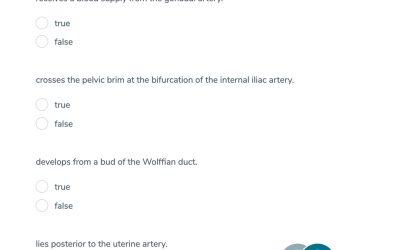
GSSE Question Bank
GSSE practice question! Here’s another of our true/false (type X) questions to help with your exam preparation.
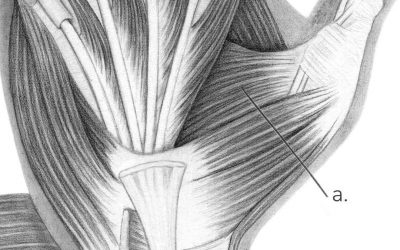
The Complexities of Hand Anatomy
Spot test! The hand is one of the most complex and beautiful pieces of natural engineering in the human body, allowing for such versatility from power grasp to precision manipulation.
Small AAA to repair or not to?
This is a great article for all those interested in vascular surgery! And helps explain why >5.5cm is the cut off point for AAA repair. This landmark study by the UK NHS clearly shows that early surgical intervention for small abdominal aortic aneurysms confers no survival benefit over surveillance.
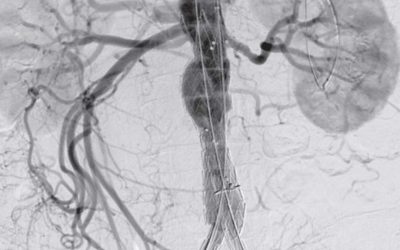
Endovascular Arterial Repair (EVAR)
What a fantastic image! Interventional and endovascular procedures are revolutionising the field of surgery. It is fascinating to see the anatomy light up like this, and even more incredible to be able to ‘intervene’ with minimally invasive procedures.
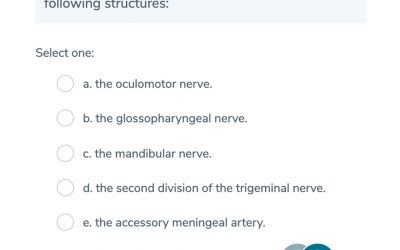
Single Best Answer – Cranial Foramina
The numerous foramen of the skull base are collectively known as the cranial foramina and are most commonly considered in the context of the cranial nerves. It is essential to be able to identify the various foramen and the structures they transmit.
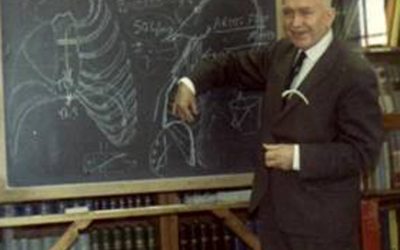
The Man Behind The Book – Prof. Last
Lasts Anatomy – revered as the anatomical bible of surgical training, but who is the man behind the book?
New Zealand Orthopaedic Education Group
Primary Anatomy is immensely proud to announce our new partnership with the New Zealand Orthopaedic Education Group!
Your Comprehensive GSSE Anatomy Resource
Primary Anatomy is the comprehensive anatomy resource for students, Pre-SET and RACS trainees preparing to sit the Generic Surgical Sciences Exam (GSSE).
GSSE Registration Opens Next Week!
With the next GSSE exam on the 4th and 5th of November don’t forget to sign up! Registration opens next week from the 7th of July to the 4th of August.
Putting your name down and paying that exam fee is in many ways a great motivator, make the commitment and start your exam preparation today!
The Management of Supracondylar Fractures
Supracondylar humerus fractures are the most common elbow fracture in children, with displaced fractures generally requiring surgical management with closed reduction and percutaneous pinning as the first line treatment option. Whether you are a budding orthopod or otherwise you will without doubt encounter the child with a painful elbow following FOOSH, make sure you always consider a supracondylar fracture and are familiar with assessing X-rays of the elbow joint – look for a posterior fat pad sign and/or displacement of the anterior humeral line which is often the giveaway!
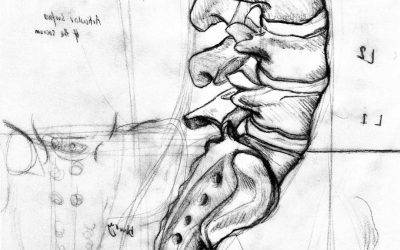
Sketch your Anatomy
Sketching is a fantastic way to study anatomy, not only does it challenge your visual memory but forces you to focus on the detail and relationships of the anatomical structures.
A must know article for Breast Surgeons
The NSABP B-06 Trial is a must know for all general surgeons and especially those with an interest in breast surgery. This multicentre trial randomised close to 2000 women with stage I or II breast cancer to mastectomy or lumpectomy, and after 20 years of follow up...
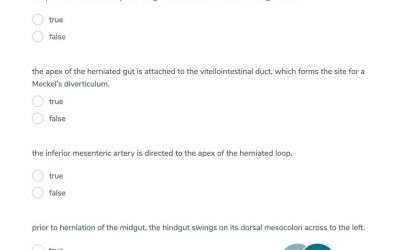
Gastrointestinal Tract Development
Development of the gastrointestinal tract is fascinating, and a good understanding of this process helps to explain the subsequent location, supply and innervation of the abdominal viscera and sections of the GIT.
Supporting our Future Surgeons
Providing support and education to our future surgeons is a huge part of our endeavour, so we are incredibly proud to announce our partnership with the University of Newcastle Surgical Society!
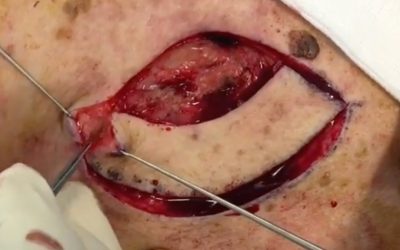
The Keystone Perforator Island Flap
The Keystone perforator island flap, invented by Australian surgeon Dr Felix Behan and first published in 2003, is essential in the arsenal of any reconstructive surgeon. The flap design is highly robust and immensely valuable for closing skin defects of the lower limb following tumour removal.
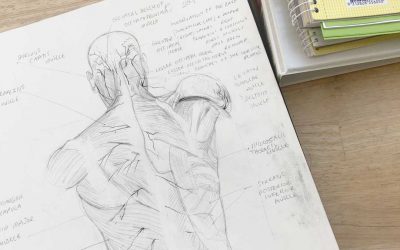
Anatomy is worth 50% of your total score
With the return of RACS exams and the next GSSE in November its times to get serious about your study! Start now and give yourself sufficient time to cover the anatomy syllabus in detail.
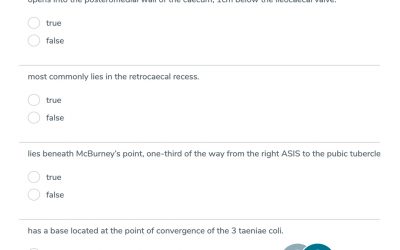
The Appendix – Question Type X
Multiple true/false question! This is must know content for your primary surgical exam (GSSE), and for all general surgeons! Acute appendicectomy is one of the most common procedures performed by general surgical trainees, so make sure you know the anatomy inside and out.
The GSSE is back up and running!
Exciting news, the GSSE is back up and running! RACS has recently announced the next exam will be held on the 4th and 5th of November, so make the most of our current sales prices and sign up to Primary Anatomy today! Its time to get through this exam and get on with your training!
PCI versus CABG – The Syntax Trial
The SYNTAX trial is the landmark RCT for cardiothoracic surgeons. CABG versus PCI. In this international trial 1800 patients with three-vessel or left main coronary artery disease were randomly assigned to either revascularisation with CABG or PCI. Those undergoing PCI were found to be more likely to reach the primary end point of death from any cause, stroke, AMI, or repeat revascularisation.

Discipline, Dedication and Hard Work
There is no easy way around learning surgical anatomy. It requires discipline, dedication and hard work. However your study technique and the resources you use are vital.
Proudly Supporting NSW Medical Students’ Council
We would like to announce our new sponsorship of the New South Wales Medical Students’ Council who are the peak representative body for over 5,700 medical students across nine medical schools in NSW and the ACT. NSW MSC advocate for the well-being, cooperation and ongoing education of all medical students across the two states and we are immensely proud to be supporting their cause during these difficult times.
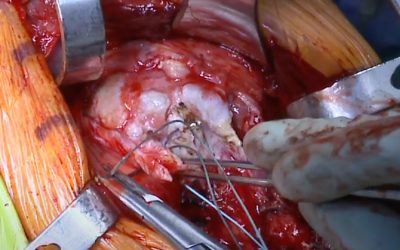
The Reverse Total Shoulder Replacement
The reverse total shoulder replacement is a fascinating concept and has become the gold standard for rotator cuff arthropathies.
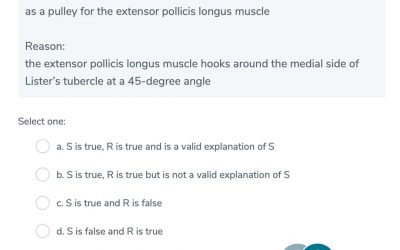
Question Type B – Listers Tubercle
Here’s one for all future orthopods and anyone else studying for the GSSE! Upper and lower limb feature heavily in the exam and comprise 18 of the 60 Anatomy MCQs!